
Author
Ammar Afridi
Founder of Picturesk
Ammar Afridi founded Picturesk, an AI headshot generator that turns a customer's own selfies into professional headshots. He built the product end to end: the photo screening that runs before anyone pays, the pipeline that trains a model on each customer's face, and the automatic refund when a run fails.
He was also the first customer. The headshots on the Picturesk home page are his, generated from his own phone selfies, and he writes from the same position every reader is in: someone who needed a good photo for LinkedIn and did not want to book a photographer to get one.
He writes about what actually decides whether AI headshots look like you, which is almost always the photos you upload, and about the honest trade-offs between an AI set and a studio session. He is based in Dubai.
Background
- Founder of Picturesk
- Built the Picturesk generation pipeline and photo screening
- Co-founder of a Dubai-based visa assistance company
- Marketing manager with a background in SEO and content
Writes about
- AI headshots
- LinkedIn profile photos
- Selfie and input quality for AI generation
- AI headshots versus photographers
- Headshots for teams and remote companies
Articles by Ammar Afridi
AI Headshots vs a Photographer: Cost, Time and Quality Compared
A photographer sells time and direction; an AI headshot generator sells speed and volume. Here is what each route is like from the first search to the finished file, where the quality really differs, and what you are paying for.
Ammar Afridi
4 Oct 2026
How Much Do Professional Headshots Cost in 2026?
A photographer session commonly costs $150 to $500, more in large cities, with retouching often charged per image on top. An AI headshot set from your own selfies is $9 to $49, paid once. Here is what each option includes, what it leaves out, and what a single usable photo really costs.
Ammar Afridi
3 Oct 2026
Is It Honest to Use an AI Headshot on LinkedIn?
Using an AI headshot on LinkedIn is honest as long as the photo looks like you. LinkedIn's guideline is about likeness, not method, so a generated image of your real face is inside the rule and a flattering lookalike is not. Here is the practical test and where the line gets crossed.
Ammar Afridi
2 Oct 2026
What Happens to Your Photos When You Use an AI Headshot Generator?
Your selfies are used to train a model on your face and generate your set. The questions that matter are what else they are used for, how long they are kept, and how you get them deleted. Here is what to ask any tool, and what Picturesk actually does.
Ammar Afridi
1 Oct 2026

Can People Tell a Headshot Is AI Generated?
People can tell when an AI headshot is bad, not when it is AI. Each tell has a specific cause, usually in the photos you upload: plastic skin, a face that is nobody in particular, light that does not match the background, odd ears or teeth, and a smile you never make. Here is what viewers actually judge in the first instant, and how to check your own set before you use it.
Ammar Afridi
30 Sept 2026
Are AI Headshots Professional Enough for Work?
AI headshots are professional enough for LinkedIn, a CV, a company page or a speaker bio, provided the selfies you fed in were good and the tool trained a model on your face rather than swapping it onto a stranger. Here is what professional actually means in a headshot, where AI is now normal, and where a photographer is still expected.
Ammar Afridi
29 Sept 2026
AI Headshot vs Face Swap: Why the Method Decides the Result
A face swap pastes your features onto a stock body and scene, which is why so many AI headshots look plastic. Training a model on five to fifteen of your own photos builds the whole image around your face instead. Here is what each method needs, what each gets wrong, and how to tell them apart before you pay.
Ammar Afridi
28 Sept 2026
How Do AI Headshot Generators Actually Work?
The good AI headshot generators train a model on your face from your own selfies and generate new photos around it. The cheap ones paste your face onto a stock body. Here is the pipeline step by step, what decides whether the results look like you, and what the technology still cannot do.
Ammar Afridi
27 Sept 2026
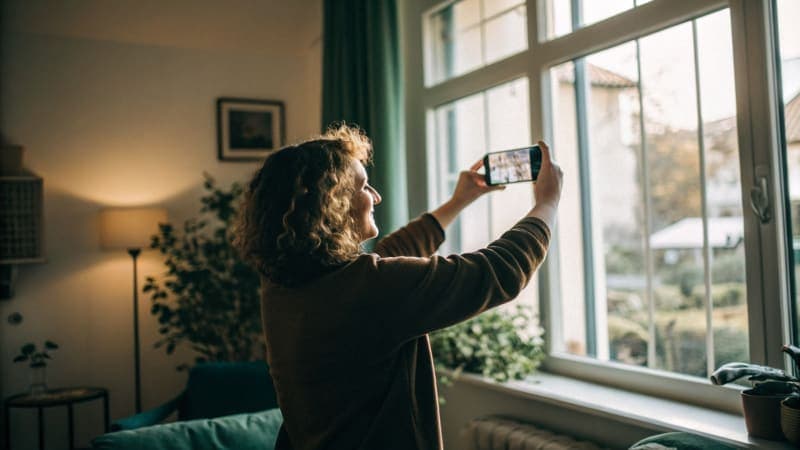
Good Light for Selfies: A Two-Minute Guide Before You Upload
Face a window in daylight, hold the phone at eye level, and your selfies are lit well enough for an AI headshot. Here is why overhead lights, evening lamps and flash all fail, a quick self-test for even light, and a two-minute checklist to run before you upload.
Ammar Afridi
26 Sept 2026
Glasses, Beards and Hats: What Changes an AI Headshot
A model learns whatever is consistently in your photos. That means glasses and a beard should appear in every upload or none, while hats and sunglasses should appear in none. Here is what each one does to the result, and how to pick the one version of yourself to upload.
Ammar Afridi
25 Sept 2026
Can You Use Old Photos for AI Headshots?
Old photos will upload fine, but the headshots they produce will not look like the person who walks into the interview. Here is what recent actually means, when an older photo is harmless, and when it quietly ruins the set.
Ammar Afridi
24 Sept 2026

Why AI Headshots Sometimes Look Nothing Like You
When AI headshots look nothing like you, the cause is almost always the input or the method. Too few photos, samey angles, filters, bad light or a tool that pastes your face onto a stock body all push the result toward a generic stranger. Here are the four causes, how to spot a poor likeness, and what to do about it.
Ammar Afridi
23 Sept 2026
The Selfies That Make AI Headshots Look Like You (and the Ones That Ruin Them)
Most bad AI headshots are bad input. The selfies that work are recent, daylight lit, close enough that your face fills the frame, taken from a few angles with a couple of natural expressions. The ones that ruin a set are sunglasses, hats, group shots, heavy filters and blurry old photos. Here is the full checklist.
Ammar Afridi
22 Sept 2026
How Many Photos Do You Need for AI Headshots?
Ten to twelve photos is the right number for AI headshots, with five as the minimum and fifteen as the maximum. The reason is variety: the model has to learn your face across angles, light and expression. Here is what to include, what to leave out, and why piling on more photos makes the results worse.
Ammar Afridi
21 Sept 2026
How Often Should You Update Your LinkedIn Photo?
Every two to three years is the rule, and sooner whenever something about your face or your job changes. A dated photo makes people recalibrate the moment they meet you, and that is a bad first minute to waste. Here are the triggers, the cost of ignoring them, and why a fresh set no longer needs a photographer.
Ammar Afridi
20 Sept 2026
Should You Smile in Your LinkedIn Headshot?
Yes, you should smile in your LinkedIn headshot, as long as it is a natural, relaxed one. Trustworthiness is the first thing people judge from a face, and a positive expression pushes it up. Here is when a neutral expression is the better call, why a forced grin backfires, and how to get a real smile on demand.
Ammar Afridi
19 Sept 2026
Why Your LinkedIn Photo Gets Cropped and How to Stop It
LinkedIn displays your profile photo inside a circle at small sizes, so the corners of every square upload are lost. Anything near the edges, from the top of your head to your shoulders, gets clipped. The fix is composition: head and shoulders, headroom, face in the centre, and a square source file.
Ammar Afridi
18 Sept 2026
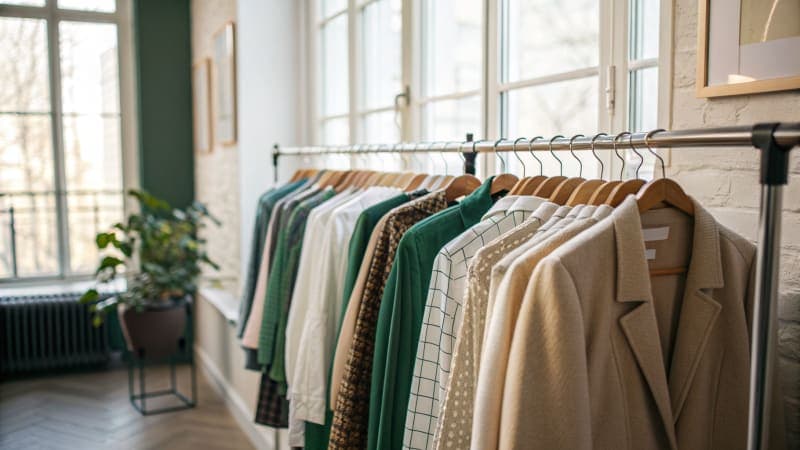
What to Wear for a LinkedIn Headshot
Wear a solid mid-to-dark colour that contrasts with your background, keep the neckline simple and leave off logos, hats and big jewellery. Here is what reads well at thumbnail size, what each industry expects, and how to pick between the eight Picturesk outfit options.
Ammar Afridi
17 Sept 2026
Best Background for a LinkedIn Headshot: Studio, Office or Outdoors?
The best background for a LinkedIn headshot is the one that disappears: a plain studio backdrop or a softly blurred office. Here is why outdoor and busy scenes fail once the photo is shrunk to a circle, how the light on your face has to agree with the backdrop, and which of the eleven Picturesk backgrounds suits which kind of work.
Ammar Afridi
16 Sept 2026
What Makes a Good LinkedIn Profile Photo in 2026?
A good LinkedIn profile photo is decided in a tenth of a second and it has four ingredients: it is recent, it is head and shoulders, the light is even, and it looks like the person who turns up. Here is what each one means in practice, and how to get there without a photographer.
Ammar Afridi
15 Sept 2026