Good Light for Selfies: A Two-Minute Guide Before You Upload
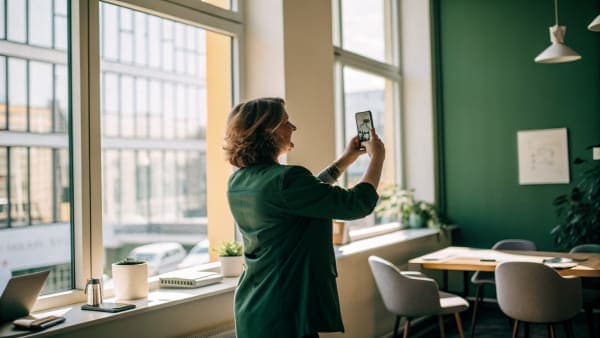
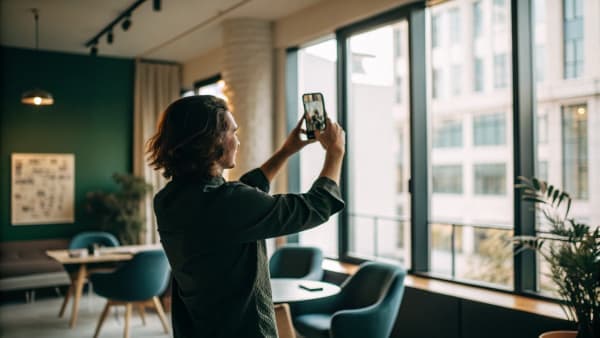
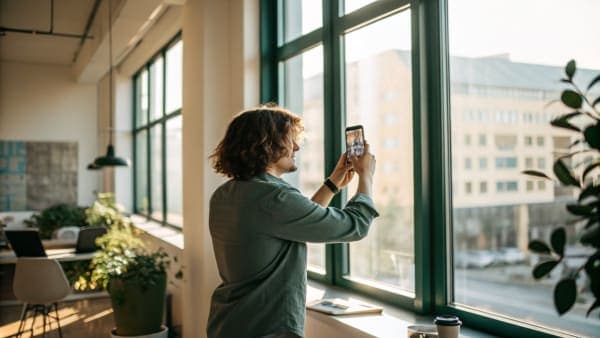
Good light for selfies means daylight from a window in front of you, phone at eye level, with both cheeks lit evenly and both eyes clearly visible. Skip ceiling lights, evening lamps and flash. Light matters more for AI headshots than for a normal selfie because the model learns the face it is shown, so a set of 10 to 12 window-lit photos gives it the true version of you.
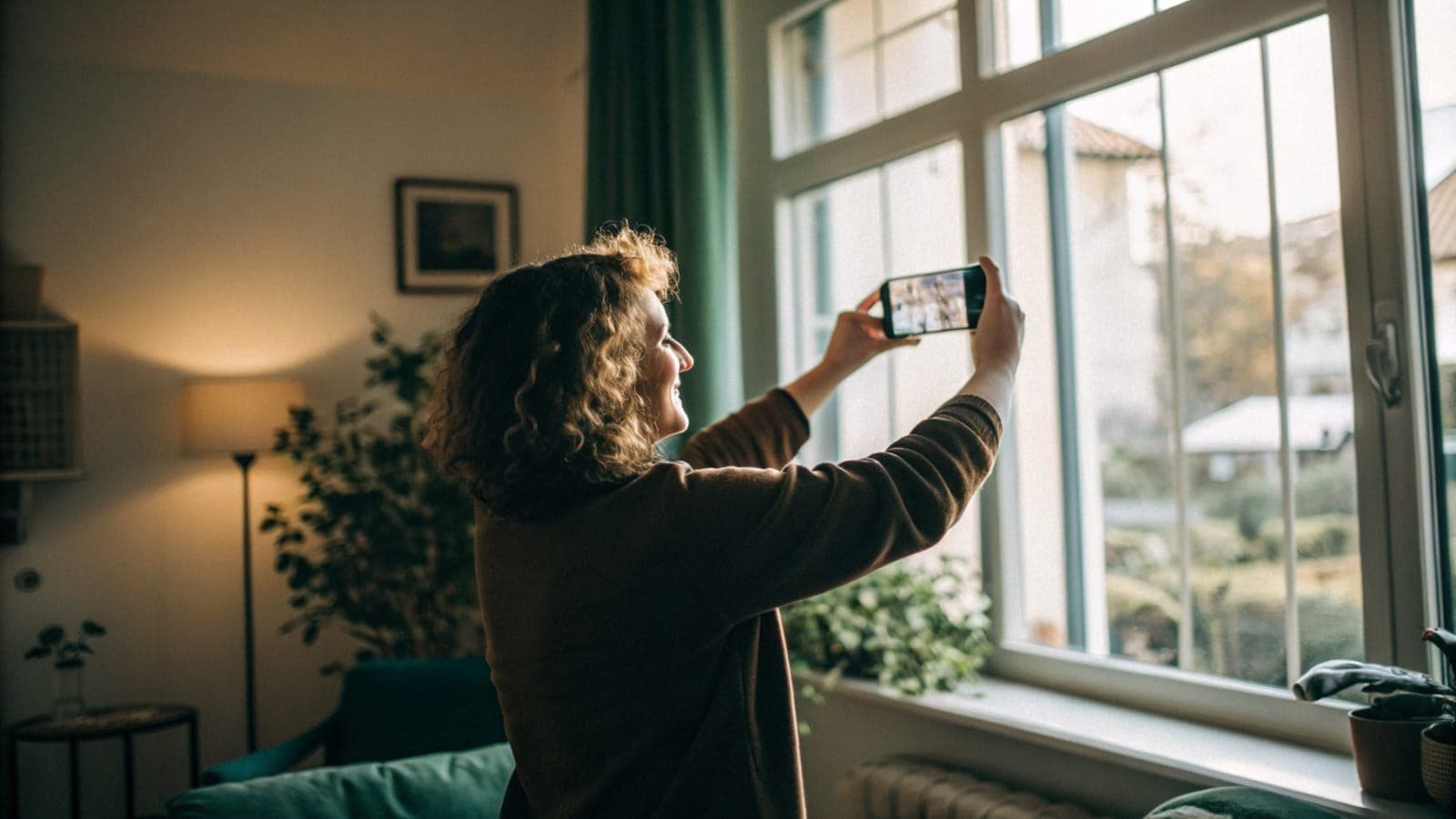
Face a window in daylight, hold your phone at eye level, and you are done. That single change fixes more selfies than any app, filter or camera setting. Everything else in this guide is a way to check you actually did it.
What is good light for selfies before you upload?
Good light is soft daylight coming from in front of you, at roughly the height of your face. A window you are facing does this for free: it lights both cheeks, fills in the eye sockets and shows the true colour of your skin. Ceiling lights, bedside lamps and phone flash all light you from the wrong direction or in the wrong colour, and each one leaves a mark the camera cannot undo.
| At a glance | What to do |
|---|---|
| Light source | A window in daylight, sun not shining directly on you |
| Where the window sits | In front of you, not behind you and not only to one side |
| Phone height | Eye level, arm's length or propped on a shelf |
| Time of day | Daytime; an overcast afternoon is ideal |
| Photos to take | 5 to 15 for Picturesk, 10 to 12 is the sweet spot |
| Time needed | About two minutes once you are at the window |
Why should the window be in front of you?
Because the camera exposes for the brightest thing it sees. Put the window behind you and the brightest thing is the sky, so your face turns into a dark, grainy shape with a glowing outline. Put the window to one side only and you get one bright cheek, one shadowed cheek and a nose shadow across your face.
Face the window and the light lands on both cheeks at once. Your eyes pick up a small bright reflection, which is what makes a face look awake. Stand close enough that the window fills your view, and step back if the sun is hitting you directly and making you squint.
Why do ceiling lights, lamps and flash fail?
Overhead ceiling light comes from above your head, so your brow shades your eyes, your nose casts a shadow onto your lip and your cheeks go hollow. It is the light that makes everyone look tired in a lift. Even a bright room can do this if the only source is on the ceiling.
The evening lamp has two problems. It is orange, so your skin takes on a cast the camera struggles to correct, and it is dim, so the phone raises its sensitivity and fills the picture with speckled noise. Flash does the opposite and blasts you from the front at close range, flattening every contour and leaving harsh black shadows behind your head.
How do you check the light is even?
Open the camera, look at yourself, and run this test. Can you see both eyes clearly, with colour in them and no dark sockets? Are both cheeks the same brightness, with no hard line down the middle of your nose?
If either answer is no, turn slightly until it is yes. A small quarter turn toward the window usually fixes a one-sided face. If your eyes are still shadowed, lift your chin a touch or move closer to the glass.
Why does light matter more for AI headshots than a normal selfie?
A normal selfie is one photo that one person glances at. An AI headshot generator is different: we train a model on your face from the photos you give it, and the model learns the face it is shown. Feed it dim, orange, shadowed selfies and it learns a dim, orange, shadowed version of you, then reproduces it in a suit.
Research backs up how much light alone can shift what a face seems to say. A 2014 PNAS study found that first impressions vary substantially across different photos of the same person, with lighting, pose and expression moving the judgement. An earlier Cognition paper showed that photos of one unfamiliar face can vary so much that people sort them as different people.
That is why input quality is the biggest lever on whether the results look like you. Picturesk checks every photo before payment for one clear face and uncovered eyes, but it cannot add light that was never there. Consistent window light across all 10 to 12 photos gives the model one true face to learn, and that is what the 3-day look-like-you guarantee rests on.
The two-minute checklist
- Go to the biggest window in the house during daylight and turn off the room lights.
- Face the window squarely, about an arm's length from the glass.
- Raise the phone to eye level, or prop it on a shelf at that height.
- Check both eyes are bright and both cheeks match, then turn slightly if they do not.
- Take 10 to 12 photos, moving your head a little between each so the angles vary.
- Flick through them and delete any where you squinted or the light shifted.
That is the whole job. With those photos on your phone you can start a set with the Picturesk AI headshot generator and have the finished headshots in your inbox in about an hour.
Sources
- Modeling first impressions from highly variable facial images, PNAS
- Variability in photos of the same face, Cognition (ScienceDirect)
Got your window-lit selfies? Turn them into headshots
Upload five to fifteen photos, choose your backgrounds and outfits, and we train a model on your face and email the full set in about an hour. Start a set with the AI headshot generator from $9, paid once, with no subscription. If the results do not look like you, reply within 3 days for a full refund.
Frequently Asked Questions
Written by

Ammar Afridi
Founder of Picturesk
Ammar Afridi founded Picturesk, an AI headshot generator that turns a customer's own selfies into professional headshots. He built the product end to end: the photo screening that runs before anyone pays, the pipeline that trains a model on each customer's face, and the automatic refund when a run fails.