Are AI Headshots Professional Enough for Work?
Yes. An AI headshot is professional enough for a head-and-shoulders photo on LinkedIn, a CV, a company page or a speaker bio, on two conditions: the input selfies were clear and recent, and the tool trained a model on your face rather than swapping it. Viewers judge a face in about 100 milliseconds, so a clear, evenly lit, current photo that looks like you is what counts.
Yes, an AI headshot is professional enough for work, as long as you mean a head-and-shoulders profile photo and not a magazine cover. Two conditions apply: the selfies you uploaded were clear, recent and evenly lit, and the tool trained a model on your face rather than pasting your features onto a stock body. Get those right and nobody reviewing your LinkedIn profile, CV or company page will know or care how the photo was made.
The reason is that a viewer judges a face far faster than they inspect a photo. Princeton research found people form impressions of trustworthiness and competence after about 100 milliseconds. What they are reading is the face, the light and the framing, not the camera.
Are AI headshots professional enough for work?
For a profile photo, yes. Professional in a headshot means five things: the image is sharp, it is current, the light on your face is even, your dress matches your field, and the person in the frame is recognisably you. An AI headshot generated from good selfies by a tool that trains on your face meets all five.
Where it stops being enough is when the job needs more than a head and shoulders: an executive portrait for an annual report, an editorial feature, a full-body shot or a group photo. Those still need a photographer in the room.
At a glance
| Question | Answer |
|---|---|
| Is an AI headshot acceptable on LinkedIn? | Yes, if it reflects your likeness. That is LinkedIn's own rule for any photo. |
| How fast is a headshot judged? | About 100 milliseconds, according to Princeton research on first impressions. |
| What does a photo profile earn you? | Up to 21 times more profile views and 9 times more connection requests, per LinkedIn. |
| Where is a photographer still expected? | Executive portraits, editorial, full-body and group shots. |
| What input does Picturesk need? | 5 to 15 recent selfies of one person, 10 to 12 is the sweet spot. |
| Turnaround and price | About an hour by email, from $9 for 5 headshots, $29 for 25, $49 for 60. |
What does professional actually mean in a headshot?
It does not mean expensive and it does not mean studio. It means the photo does its one job, which is to let a stranger recognise you and trust you in the time it takes to scroll past. Five ingredients do that work.
- Clear. Sharp focus on the eyes, no motion blur, no compression mush from a screenshot of a screenshot.
- Current. Taken, or generated from photos taken, in the last year or two. Same hair, same glasses, same face shape as the person on the call.
- Evenly lit. Soft light across the whole face, no harsh shadow under the nose or one side in darkness.
- Appropriately dressed. A suit in finance, a collared shirt or smart knit in tech, a blazer for consulting. Dressed for the job you are describing, not a wedding.
- Looks like you. Not a flattering cousin. You, on a good day.
Notice that none of these mention how the photo was taken. A photographer gets you there by controlling the light and coaching your expression, and a good AI tool gets you there by learning your face from several photos and generating a clean, well lit version of it. A bad selfie fails on three of the five, which is why most people are looking for an alternative in the first place.
What does a viewer actually judge in your headshot?
Not the camera. The Princeton work by Willis and Todorov showed that judgements of trustworthiness, competence, likeability and attractiveness form after roughly a tenth of a second, and longer exposure mostly makes people more confident in the verdict they already reached. The Association for Psychological Science describes the same pattern across the wider research: first impressions from faces are fast, automatic and hard to shift.
The part that matters for this question is what moves those judgements. Research published in PNAS found that first impressions vary substantially across different photos of the same person, driven by lighting, pose and expression. In other words, the impression lives in the image properties, and a well produced AI headshot controls exactly those properties.
So the question a hiring manager is unconsciously answering is not "was this shot by a professional" but "does this person look competent, approachable and real". A clean AI headshot with a slight smile and soft light answers yes. A dim bathroom selfie answers no, however honest it is.
Where are AI headshots now normal?
Anywhere the photo is small, square and sits next to your name. These are the contexts where nobody expects a studio session and an AI headshot is simply the photo.
- LinkedIn. The photo shows inside a small circle. LinkedIn's own data says members with a photo get up to 21 times more profile views and 9 times more connection requests, so the priority is having a good one at all. A set of LinkedIn headshots from Picturesk is built for exactly this crop.
- Company team pages. Consistent background, consistent framing, everyone looking like they were photographed the same week. Harder to achieve with a photographer visiting three offices than with each person generating a set on the same background.
- CVs and resumes. In markets where a photo is expected, a neutral studio headshot reads as prepared.
- Speaker bios and conference pages. Organisers want a square, well lit head-and-shoulders image. That is the whole brief.
- Email signatures, Slack, Zoom, internal directories. Tiny, everywhere, and nobody is zooming in.
When is a photographer still expected?
When the photo is the product rather than a label. There are four cases where you should still book someone, and an honest AI tool will tell you so.
- Executive portraits for an annual report or investor material. These are printed large, art directed and expected to be a real sitting. The board photo is a signal of seriousness in itself.
- Editorial and press features. A magazine or newspaper wants its own photographer's work, in its own style, and will usually send one.
- Full-body and environmental shots. You on the shop floor, in the lab, at the site. AI headshot tools generate head and shoulders; a real location needs a real camera.
- Group and team photos. Several people in one frame, together, at once. That is a photographer's job by definition.
For everything else on the list above, a photographer is a fine choice but not a required one. If you want the full trade-off on cost, time and quality, our AI headshots versus photographer comparison goes through it line by line.
What makes an AI headshot look unprofessional?
The same things that make any headshot look wrong, plus a few that are specific to how the image was generated. If you can spot these, you can reject them before they go anywhere near your profile.
- Plastic skin. Pores gone, texture gone, a waxy glow across the cheeks. Real faces have texture, and viewers notice its absence even if they cannot name it.
- Wrong proportions. A head slightly too large for the shoulders, ears at different heights, teeth that are too even. Any one of these tips a face into uncanny.
- A face that is nobody. The biggest tell. The output is attractive, symmetrical and generic, and it is not you. This happens when the tool swaps or blends a face rather than learning yours.
- An outfit that does not match your field. Black tie on a junior developer, a hoodie on a wealth manager. Picturesk offers eight outfits from black tie to a smart knit precisely so you can pick the one your industry actually wears.
- A background you could never have stood in. A dramatic studio when everyone else on the team page is in a plain office is fine, but a beach at sunset on a law firm bio is not.
Most of these come from the input rather than the tool. Blurry, dark or inconsistent selfies give the model a vague idea of your face, and a vague idea is what comes back. Research in Cognition found that different photos of the same unfamiliar face vary so much that people often sort them as different people, which is exactly why a model needs 10 to 12 varied, well lit photos rather than one good one.
Is an AI headshot allowed on LinkedIn?
Yes, on one condition that applies to every photo, AI or not. LinkedIn's profile photo guidelines say the photo must reflect your likeness, and LinkedIn may remove photos that consist solely of someone else's likeness, stock imagery, celebrities, fictional characters, logos or landscapes. The rule is about who is in the picture, not what made it.
The practical test is simple: would someone who met you at a conference recognise you from the photo, and the other way round? If yes, it is your likeness. If the headshot is a polished stranger, it fails LinkedIn's rule and, more importantly, it fails the first interview handshake.
That is why the method matters. Picturesk trains a model on your face from 5 to 15 of your own selfies, screens each photo before you pay, and then generates the set across the backgrounds and outfits you chose. If the results do not look like you, you reply to the delivery email within 3 days and get a full refund under the look-like-you guarantee.
Professional enough if: the checklist
Run your finished headshot, from any source, through this before you upload it anywhere. If every line is a yes, it is professional enough for work.
- Someone who knows you would say "that's you" without hesitation.
- The eyes are sharp and the light across the face is even, with no heavy shadow on one side.
- Skin has visible texture and nothing about the proportions makes you look twice.
- The outfit is what a senior person in your field would wear to a client meeting.
- The background is plain or a believable office, studio or outdoor setting, not a fantasy.
- It was taken, or generated from photos taken, within the last two years.
- The framing is head and shoulders and still reads clearly at thumbnail size.
- You would be comfortable if the person interviewing you had the photo open on their desk.
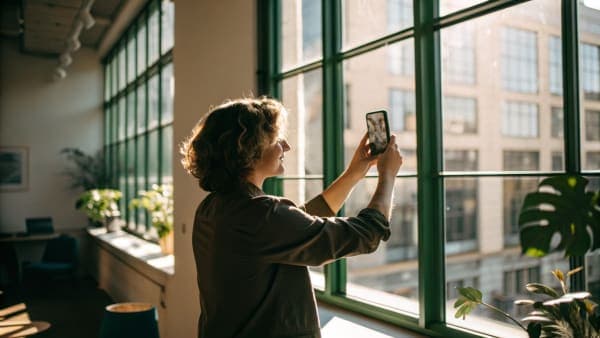
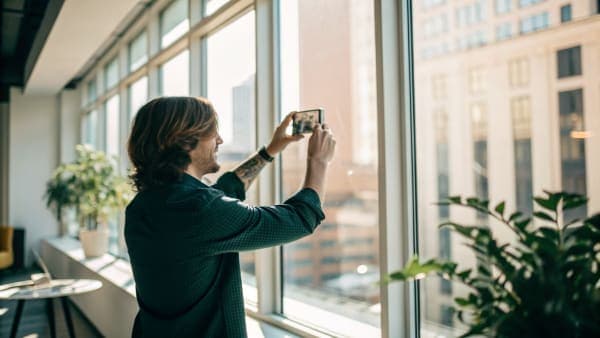
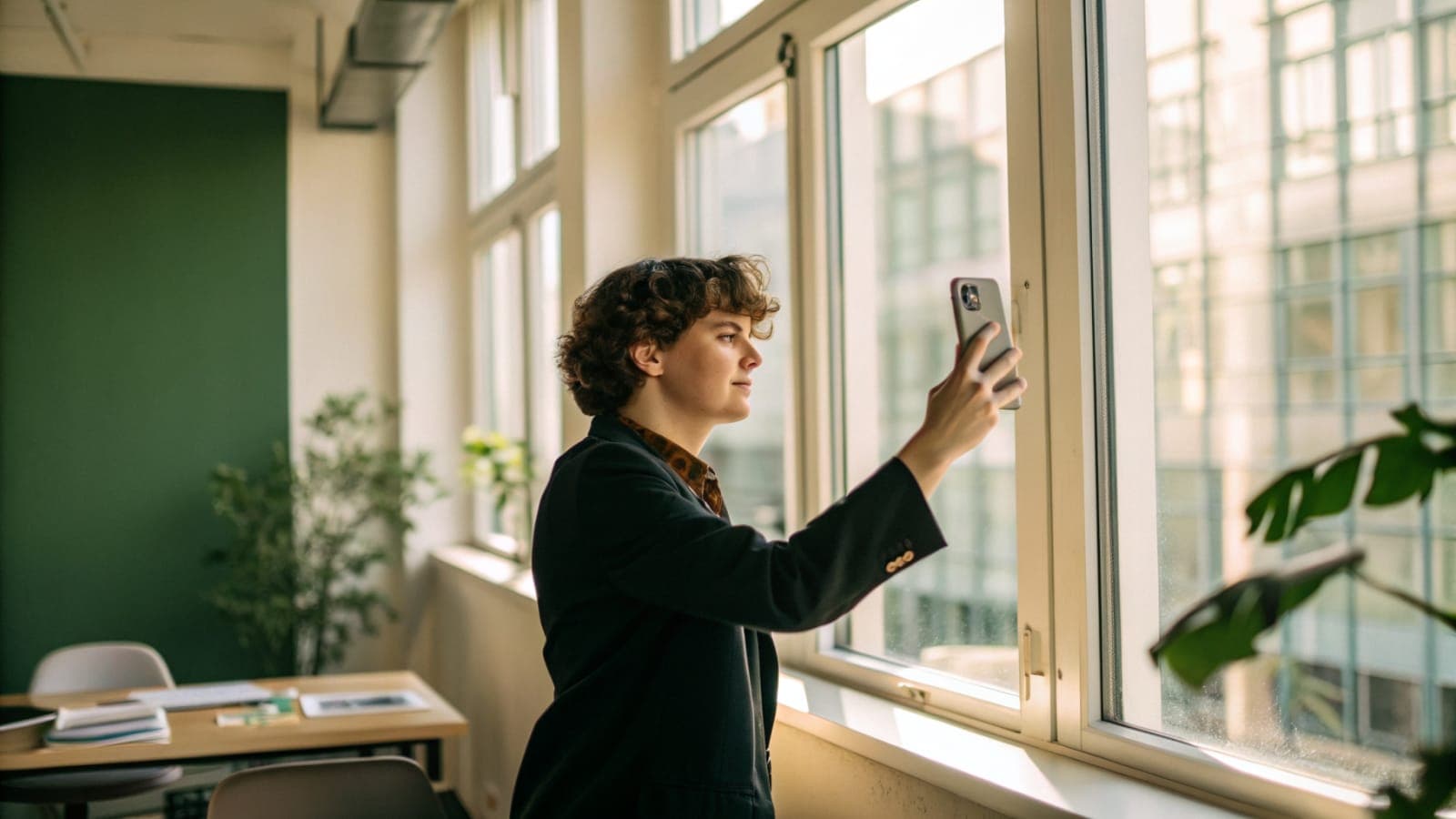
If you are starting from scratch, the fastest way to get all eight is to take 10 to 12 clear selfies by a window, upload them to an AI headshot generator that trains on your face, and pick a background and outfit that match your industry. The set arrives by email in about an hour, and you can run it through the same list before you post it.
Sources
- Snap judgments decide a face's character, psychologist finds, Princeton University
- Studying First Impressions: What to Consider, Association for Psychological Science
- Modeling first impressions from highly variable facial images, PNAS
- Picture Perfect: Make a Great First Impression with Your LinkedIn Profile Photo, LinkedIn Sales Solutions
- Variability in photos of the same face, Cognition (ScienceDirect)
- Profile photo guidelines and conditions, LinkedIn Help
Need a work-ready headshot this week?
Upload 5 to 15 selfies, choose your backgrounds and outfits, and Picturesk trains a model on your face and emails a full set in about an hour. Get your AI headshots from $9, paid once, with no subscription. If they do not look like you, reply within 3 days for a full refund.
Frequently Asked Questions
Written by
Ammar Afridi
Founder of Picturesk
Ammar Afridi founded Picturesk, an AI headshot generator that turns a customer's own selfies into professional headshots. He built the product end to end: the photo screening that runs before anyone pays, the pipeline that trains a model on each customer's face, and the automatic refund when a run fails.