Can You Use Old Photos for AI Headshots?
You can use old photos for AI headshots, but you should not if you want the result to look like you today. We train a model on the faces in your uploads, so mixing a face from 2019 with a face from 2026 produces a blend that is neither. Use 10 to 12 selfies from the last year or so, with the same hair, beard and glasses you have now.
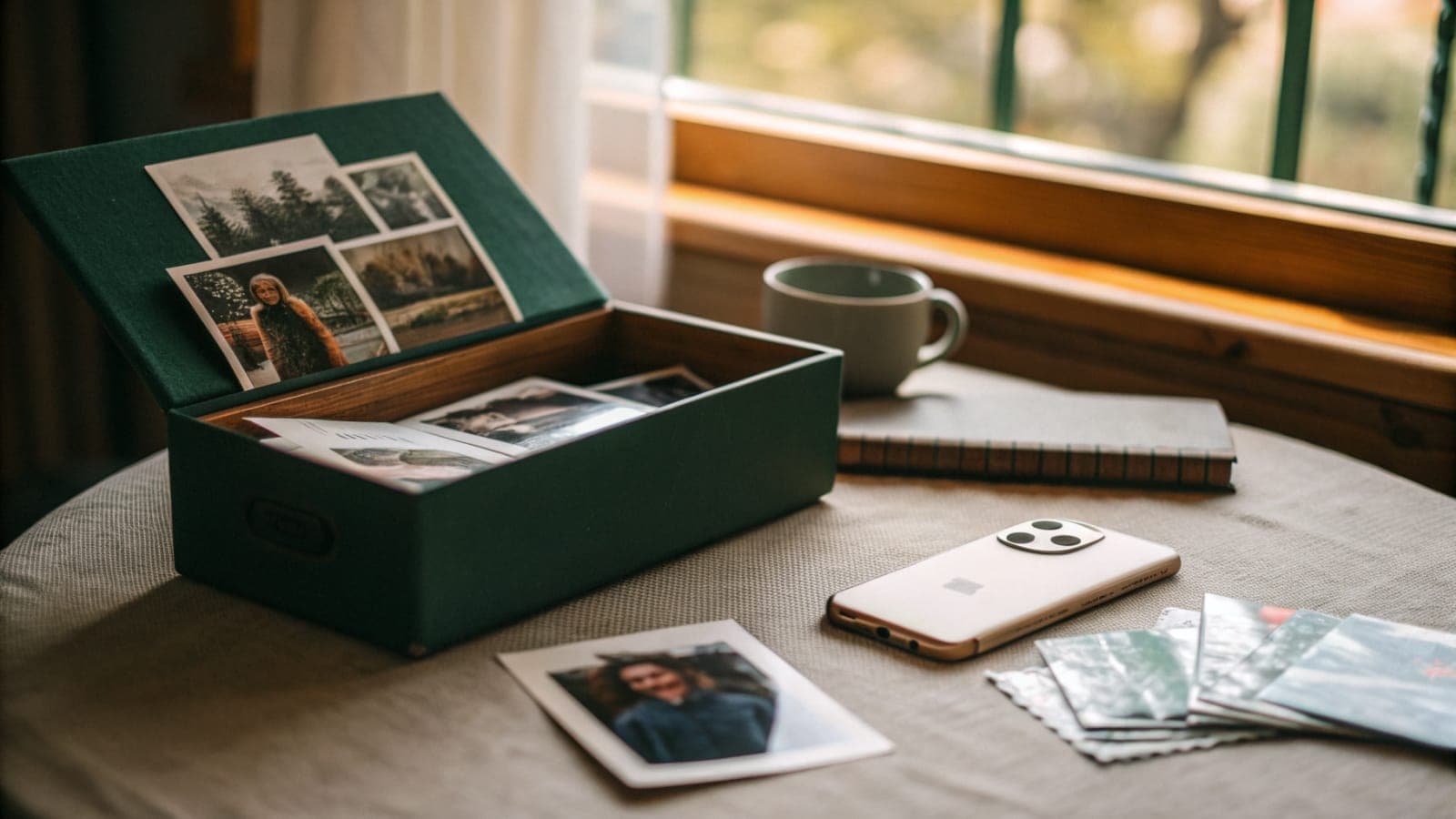
Yes, you can use old photos for AI headshots, and no, you should not if you want the result to look like you. We train a model on the faces in your uploads, so an old face and a current face teach it two different people. The output lands somewhere in between, and that is the one thing a headshot cannot afford to be.
This guide covers what recent actually means, when an older photo is harmless, when it does real damage, and why phone quality is not the problem people think it is.
Can you use old photos for AI headshots?
Technically yes, because an old photo with a clear face passes any upload check. Practically no, because the model learns the average of what it sees. Feed it a 2019 haircut and a 2026 beard and it produces a person with a bit of each, which looks convincing on screen and wrong in the room.
Picturesk asks for recent selfies for exactly this reason, and the only test that matters is whether the headshot matches the person who turns up.
At a glance
| Question | Answer |
|---|---|
| Will an old photo upload? | Usually yes, if the face is clear and nothing covers the eyes |
| Should you use one? | Only if nothing about your face, hair, beard or glasses has changed since |
| What counts as recent | The last year or so, same hair, same beard or glasses situation as today |
| How many photos Picturesk takes | 5 to 15, with 10 to 12 the sweet spot |
| What the model learns from | The faces in your uploads, blended. Two eras produce a blend of both |
| Safety net | 3-day look-like-you guarantee: reply to the delivery email and get a full refund |
What does "recent" actually mean?
The last year or so is a reasonable rule, but the calendar is a proxy. What you are really checking is whether the person in the photo could walk into a meeting today and be recognised without a second look. A photo from eighteen months ago with your current hair beats a photo from last month with a beard you have since shaved.
Run through the list before you upload: same hairstyle and colour, same beard or clean-shaven, same glasses or no glasses, roughly the same weight, and no dramatic change in skin tone from a holiday or a tan. If every box ticks, the photo is recent enough. If two or three do not, leave it out.
When is an older photo fine?
When nothing has changed. Some people look the same for a decade, and for them a three-year-old photo is a perfectly good training image. The model does not read the file date, it reads the face, so consistency is what it rewards.
There is a second case: you are short on photos and the old one fills a gap the others miss, such as a different angle or better light on one side of your face. If it matches the rest of the set, use it. If it is the only photo with a fringe, it will pull the whole set toward that fringe.
When does an old photo ruin the set?
When it captures a version of you that no longer exists. The usual culprits are weight, hair, beard, glasses and plain age. Any one of these changes the shape of the face the model learns, and two of them at once give it a genuinely different person to average against.
- Weight: jawline and cheeks move more than you think. A ten-kilo difference reads as a different face in a thumbnail.
- Hair: length, colour and parting all shift the outline of your head, which is what the model uses to anchor everything else.
- Beard: the biggest single change to the lower half of a face. Mixing bearded and clean-shaven produces a blur neither of you would wear.
- Glasses: frames alter the eye region, and half-glasses, half-not gives the model a frame it half draws.
- Age: five years on a face is subtle in person and obvious side by side.
The research backs this up. A well-known study in Cognition found that different photos of the same unfamiliar face vary so much that people frequently sort them as different people, and that variability within one person is often larger than the differences between people. Add a few years of change to that natural spread and the model has no stable face to learn.
Is phone quality the problem?
No. People assume an old photo is bad because it came from an older phone, but a five-year-old phone camera in daylight produces a perfectly usable face. What matters is whether that face agrees with the other nine to eleven faces in the set.
Consistency across the set beats sharpness in any single image. Ten phone selfies taken this month, in similar light, with your current haircut, will train a better model than three studio portraits from different years. If you only change one thing about how you gather photos, make it this.
Why does looking like you today matter so much?
Because the headshot has one job, which is to match the person who shows up. LinkedIn's own guidelines say a profile photo must reflect your likeness, and the platform reserves the right to remove photos that do not. A headshot built from a younger, slimmer or hairier version of you fails that test even though every pixel came from your own face.
Recruiters and clients notice too. A photo that does not match the video call plants a small doubt before you have said a word, and that doubt is the opposite of what a headshot is for.
Does Picturesk check how old a photo is?
No, and no tool can. Picturesk screens every upload before payment for one clear face, large enough in the frame, with nothing covering the eyes, and tells you which photos fail so you can swap them. What it cannot tell is whether the face in a photo is the face you have now.
That part is on you. Pick 10 to 12 selfies from the last year or so that match how you look today, run them through the AI headshot generator, and the results should arrive in about an hour. If they do not look like you, reply to the delivery email within 3 days for a full refund, and you keep the images either way.
Sources
- Variability in photos of the same face, Cognition (ScienceDirect)
- Profile photo guidelines and conditions, LinkedIn Help
Get headshots that look like you today
Take 10 to 12 fresh selfies this week, upload them to the Picturesk AI headshot generator, and get your set by email in about an hour. From $9, paid once, no subscription, with a full refund if they do not look like you.
Frequently Asked Questions
Written by
Ammar Afridi
Founder of Picturesk
Ammar Afridi founded Picturesk, an AI headshot generator that turns a customer's own selfies into professional headshots. He built the product end to end: the photo screening that runs before anyone pays, the pipeline that trains a model on each customer's face, and the automatic refund when a run fails.